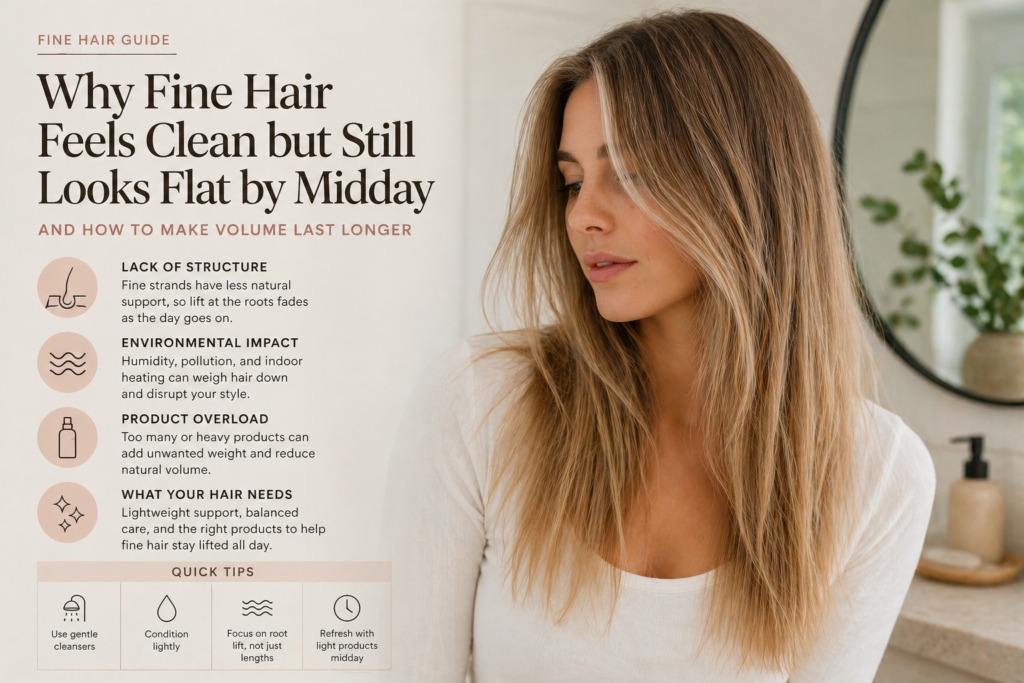
Fine hair creates one of the most common frustrations in haircare—it can feel freshly washed, soft, and clean in the morning, yet by midday it already appears flat, lifeless, and lacking shape. The roots begin to settle, the volume fades, and the style that seemed effortless only a few hours earlier starts to lose its definition. This happens so often that many people assume it is simply the nature of fine hair. But the reality is more specific: fine hair does not lose volume because it is dirty; it loses volume because it lacks the structural support to maintain lift over time.
This distinction matters, because it changes the way fine hair should be treated. If the problem is assumed to be oil or cleanliness, the natural response is to wash more frequently or use stronger cleansing products. But this often creates the opposite effect. Overwashing can increase sensitivity at the scalp and disrupt the balance that fine hair needs to remain light and responsive. The issue is rarely that the hair is unclean—it is that the hair has not been given enough support to hold its shape throughout the day.
In London, where fine hair is exposed to fluctuating humidity, urban pollution, and long hours spent moving between heated interiors and damp outdoor air, this loss of structure becomes even more noticeable. The environment adds subtle pressure to already delicate strands. Fine hair reacts quickly to that pressure, and without the right routine, the style begins to soften long before the day is over.
To understand why this happens, it is important to understand what fine hair needs beyond basic cleansing.
Why Fine Hair Loses Lift So Easily
Fine hair is not defined by the amount of hair on the head but by the diameter of each strand. The strands themselves are narrower, lighter, and naturally less resistant than medium or coarse hair. This lightness gives fine hair softness and movement, but it also makes it more vulnerable to collapse.
Each strand supports less weight, which means that even natural oils, environmental moisture, or lightweight products can reduce lift at the roots. The hair begins the day with volume, but as the strands settle, the shape gradually softens.
This is why fine hair often looks flatter as the day progresses, even when it still feels clean. The issue is not buildup—it is the lack of internal strength to maintain the lifted shape.
This also explains why styling fine hair can feel temporary. It responds quickly when styled, but without enough support, it cannot hold that style for long.
Why Clean Hair Is Not the Same as Supported Hair
Many people assume that if the hair is clean, it should naturally look fresh and full. But cleanliness and structure are not the same thing.
Clean hair is free from excess oil and residue, but it may still lack the texture and reinforcement needed to maintain volume. Fine strands, even when perfectly clean, naturally fall into place unless something supports them.
This is why washing the hair more often does not necessarily improve the result. In fact, excessive washing can remove the natural balance that fine hair needs, leaving it softer but less structured.
The goal is not simply to create cleanliness. The goal is to create a foundation where the hair can remain lifted and responsive.
The Role of Targeted Support in Fine Hair
For fine hair to maintain volume, it needs products that improve its ability to hold structure without increasing weight.
This is where fine hair products become essential. Rather than coating the strands or adding surface-level volume, these formulations are designed to strengthen the hair’s natural structure while preserving its lightness.
This kind of support changes how the strands behave. Instead of collapsing quickly under their own softness, the hair maintains subtle resistance, allowing the roots to stay lifted and the overall shape to last longer.
The difference is not dramatic or artificial—it is a more stable version of the hair’s natural behaviour.
Why Overloading Fine Hair Reduces Volume
One of the most common mistakes in fine hair routines is using too many products.
Volumisers, creams, oils, sprays, and conditioners are layered with the intention of improving body and hold. But because fine strands are so lightweight, even small amounts of excess product can reduce volume.
The added weight causes the roots to fall, the lengths to lose movement, and the overall style to flatten more quickly.
This is why minimal, targeted support works better than layering multiple products. Fine hair needs precision, not excess.
Using the right fine hair products in the right amount allows the strands to stay light while improving their ability to hold shape.
London’s Environment and the Midday Collapse
Fine hair is particularly reactive to environmental changes, and London’s climate creates constant variation.
Outdoor humidity softens the hair, making it more likely to lose lift. Indoor heating dries the strands, affecting flexibility and movement. Pollution settles on the hair, adding subtle weight that may not be visible but affects structure.
These conditions change throughout the day, and fine hair responds quickly to each shift.
This is why hair that looks full in the morning often appears flatter by midday. The environment gradually reduces the structure of the hair, and without internal support, the style fades.
A well-designed routine helps the hair resist these daily pressures.
Why Lightweight Structure Is Better Than Heavy Volume
There is a common belief that more volume requires stronger products, but for fine hair, strong products often create more problems than solutions.
Heavy volumising products can create initial lift, but they often reduce softness and add weight over time. The result may look fuller at first, but the structure collapses as the day continues.
Fine hair responds better to lightweight structure—products that enhance the hair’s ability to hold shape naturally without forcing volume.
This creates a result that looks softer, lasts longer, and feels more natural.
A More Refined Routine for Fine Hair
Modern haircare is moving toward routines that prioritise balance instead of intensity.
Rather than using multiple strong products to create volume, the focus is shifting toward lightweight formulations that support the hair’s natural movement while improving stability.
In a professional consultation, this refined approach is increasingly common. Stylists at London best salons are focusing on improving the internal support of fine hair rather than layering surface-level solutions.
This creates hair that not only looks fuller but behaves more consistently.
Long-Term Improvements in Fine Hair Behaviour
When fine hair receives the right support, the changes become visible over time.
The roots maintain lift for longer periods. Styles hold shape more naturally. The hair remains soft but feels less fragile.
These improvements make the routine more predictable. Instead of losing volume quickly, the hair maintains its structure throughout the day.
This consistency reduces the need for constant adjustment and makes styling easier to maintain.
From Flat Hair to Naturally Supported Hair
The goal for fine hair is not exaggerated volume—it is lasting structure.
By improving the hair’s natural ability to hold lift, fine hair can remain fuller for longer without sacrificing softness.
Fine hair products provide this support, helping the strands maintain shape while staying lightweight and responsive.
A Closing Perspective on Helping Fine Hair Stay Lifted Longer
Fine hair does not flatten because it is dirty—it flattens because it needs more support than cleansing alone can provide.
When the routine focuses on lightweight structure instead of constant washing, the hair becomes easier to style, easier to maintain, and far more consistent throughout the day.