If you’ve ever dealt with a leaky roof, a burst pipe, or a flooded basement, you probably handled the visible mess — soaked carpets, warped floors, maybe a wet drywall patch. What a lot of people don’t think about is what happens after the water is gone. That’s usually when the real problem starts.
Mold doesn’t show up overnight, but it doesn’t take long either. And once it gets a foothold, it’s one of the more stubborn things you’ll ever have to deal with in a home.
Why Water and Mold Go Hand in Hand
Mold is a type of fungus, and like all living things, it needs a few basic conditions to survive: food, warmth, and moisture. Your home, unfortunately, provides all three in abundance. The wood framing, drywall paper, insulation, and even dust sitting on surfaces are all organic materials that mold feeds on quite happily.To tackle all these issues it would require help of Mold remediation specialists who will professionaly make your home mold free.
The one thing your home doesn’t naturally have — until something goes wrong — is excess moisture. That’s where water damage changes everything.
When water soaks into building materials, it creates exactly the kind of wet environment that mold spores have been waiting for. And here’s the thing: mold spores are always present. They float through the air constantly, both indoors and outdoors. They’re harmless in dry conditions. But introduce sustained moisture, and those dormant spores start germinating.
The Timeline: Faster Than You’d Think
Most people imagine mold as something that creeps up over weeks or months. In reality, mold can begin to colonize a damp surface in as little as 24 to 48 hours under the right conditions.
The timeline typically looks something like this:
Within the first 24–48 hours — Mold spores that have settled on wet surfaces begin to germinate. You won’t see anything yet, but the process has already started.
Days 3–7 — Colonies start forming. You might notice a faint musty smell before you see anything. That odor is actually the byproduct of mold metabolism — called microbial volatile organic compounds (MVOCs) — and it’s often the first real warning sign.
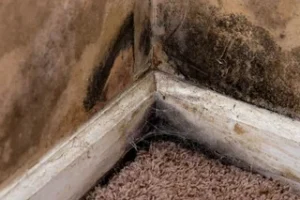
Week 2 and beyond — Visible mold patches appear, typically as fuzzy spots in shades of black, green, white, or gray. By this point, the infestation has established itself and will be significantly harder to remediate.
The temperature of your home plays a role too. Mold thrives between roughly 60°F and 80°F — which, not coincidentally, is the same range most people keep their homes at year-round.
Where Mold Hides After Water Damage
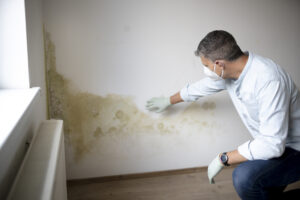
One of the trickiest aspects of post-water-damage mold is that it often grows somewhere you can’t easily see. Water follows gravity and seeps into cavities, which means mold tends to colonize the hidden parts of your home first.
Common hiding spots include:
Behind drywall. Water-soaked drywall wicks moisture inward toward the paper backing and wooden studs. Mold can establish itself there long before the surface looks or feels wet to the touch.
Under flooring. Whether it’s hardwood, laminate, or carpet, water that gets underneath flooring creates a dark, humid space that’s essentially perfect for mold growth.
Inside wall cavities. Plumbing leaks inside walls are particularly problematic because the moisture is enclosed and slow to evaporate. By the time you notice a stain on the wall, there may already be significant mold growth on the framing inside.
In HVAC systems. If flood water or high humidity reaches your ductwork, mold can grow inside the system and then get distributed throughout your home every time the air runs.
Attic and crawl spaces. Roof leaks often go unnoticed for extended periods, and attics tend to have plenty of organic material (wood framing, insulation) for mold to feed on.
Not All Water Damage Is Equal
The source of the water matters — both for your health and for how aggressively you need to respond.
Clean water from a broken supply line is the least immediately dangerous, though it will still cause mold if left unaddressed. Gray water — from appliances like dishwashers or washing machines — contains some contaminants and warrants more caution. Black water, which includes sewage backups or floodwater from outside, carries pathogens and organic material that accelerate mold growth dramatically and pose direct health risks.
Regardless of the source, the key variable is time. The longer materials stay wet, the harder complete remediation becomes.
Why Drying Out Isn’t Always Enough
A common mistake homeowners make is assuming that once surfaces feel dry, the problem is solved. Unfortunately, that’s not how it works.
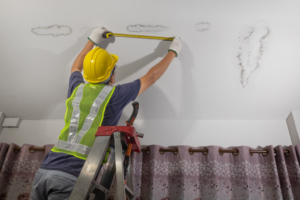
Porous materials like drywall, wood, and insulation can hold significant moisture well below the surface while feeling dry to the hand. Professional water damage technicians use moisture meters that measure moisture content inside materials — and it’s common to find elevated readings days after visible water is gone.
If those materials don’t dry completely — ideally within 48 to 72 hours of the water event — mold growth below the surface is almost inevitable. In many cases, the only real solution is removing and replacing affected materials rather than simply drying them out.
The Health Side of the Equation
Mold isn’t just a structural problem. Prolonged exposure to indoor mold can cause a range of health issues, from nasal congestion and throat irritation to more serious respiratory problems in people with asthma or compromised immune systems. Certain mold species produce mycotoxins — compounds that can be harmful with sustained exposure.
This is part of why water damage should never be treated as purely a cosmetic issue. The visible stain or warped floorboard is just the surface indicator of something that may be growing quietly inside your walls.
What You Should Actually Do
If you experience water damage, time is genuinely your most important resource. A few practical steps:
Start removing standing water and wet materials as quickly as possible. The faster you get moisture out, the smaller the window for mold to establish itself. Industrial fans and dehumidifiers — the kind professionals bring in, not household box fans — make a significant difference.
Resist the urge to simply dry everything in place. If drywall has been saturated, cutting it out and replacing it is often faster, cheaper, and more reliable than trying to dry it completely.
Have materials tested for moisture content before closing anything up. This is especially important if you’re replacing drywall or flooring — trapping moisture inside a newly finished wall is a recipe for a worse mold problem down the road.
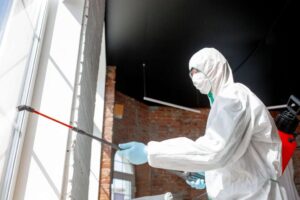
And if the damage is significant, or if you’re already seeing or smelling mold, bring in a professional. Mold remediation isn’t something that responds well to half-measures.
For More information about Water Damage, Contacts us:
Business name: Green Guard Mold Specialist Elizabeth
Address: 919 S Elmora Ave, Elizabeth, NJ 07202
Phone: 888-861-7846
Website: https://greenguardmoldelizabeth.com/